HEAD-TO-HEAD

Grip lists of your SaaS apps. Obsidian shows what they’re doing.

Grip is useful for SaaS discovery, OAuth inventory, and identity-centered governance. Obsidian adds the activity, integration, tenant, and data context security teams need to investigate, govern, and report on SaaS risk.

Trusted By

With Grip, there's a lot of noise, because there's no identity integration. Obsidian gave us the activity context to act."

Director, Enterprise Architecture & Infrastructure

Leading North American Insurer

Why Obsidian beats Grip

For security buyers, the question is not whether a tool can find SaaS apps —it is whether the data can be trusted for investigations, access reviews, audits, supply-chain risk, and executive reporting.

Activity data, not just inferred discovery

Grip is useful for discovering Saas usage and identity sprawl. Obsidian goes deeper by collecting activity from inside business-critical applications, os teams can understand what is actually happening.

OAuth context beyond grants and scopes

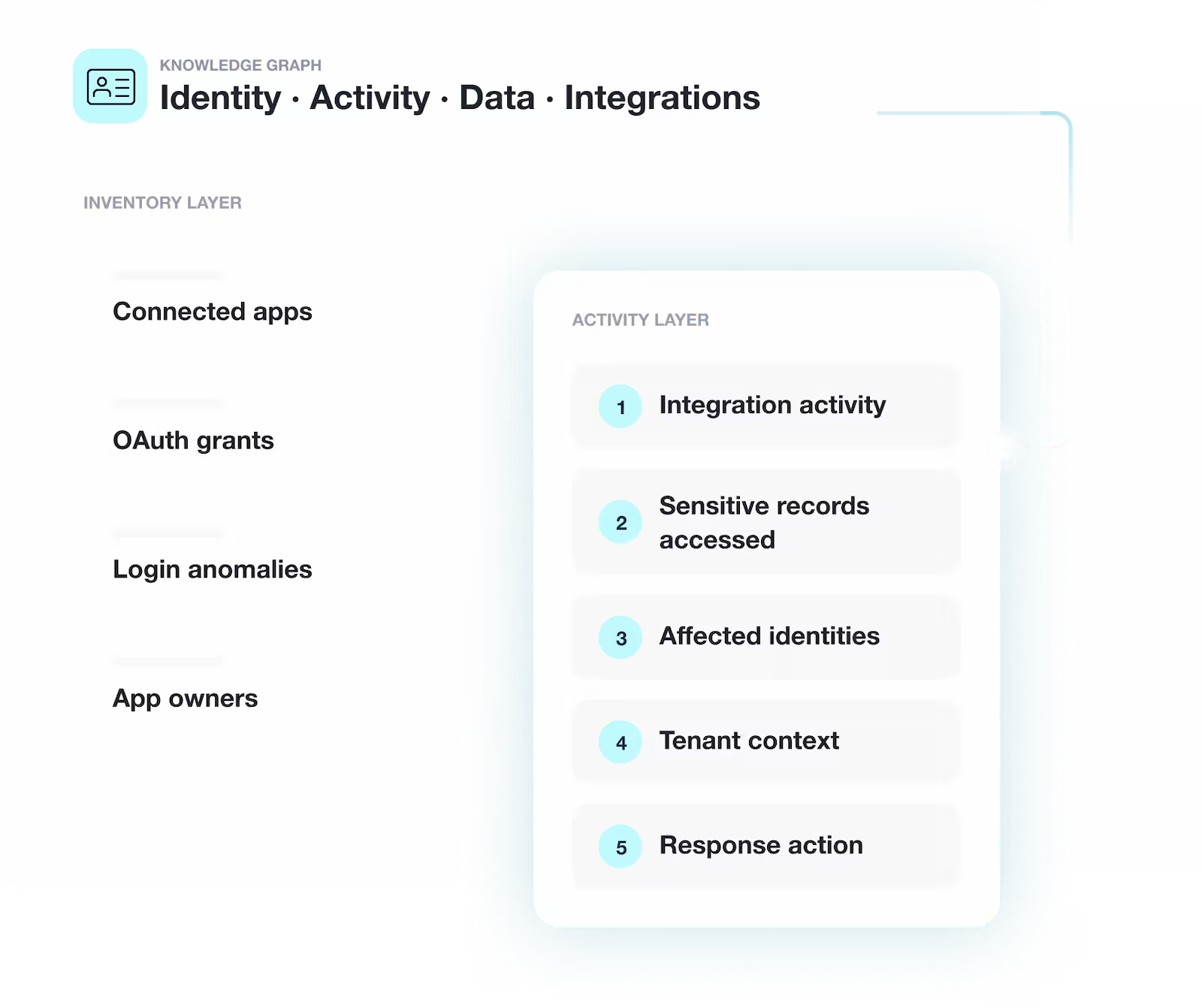
Grip can show which integrations are connected and what permissions they hold. Obsidian shows what those integrations did. which identities were affected, and where exposure may have spread.

Investigation context in one place

When a SaaS incident happens, the SOC needs identity, app activity, integration behaviour, and data movement together. Obsidian is built around that investigation workflow.

Less operational lift after discovery

Large discovery outputs can create more work for smal teams. Obsidian helps teams prioritize what matters and turn SaaS findings into governance, investigation, and response workflows.

Grip vs.Obsidian.

Grip's center of gravity is SaaS identity-risk management—discovery, OAuth inventory, identity-led governance. Obsidian secures SaaS and Al a s one system, combining posture, supply chain resilience, Al security posture, and identity-threat detection with activity- backed context.
Use Case
Grip Security
Running user access reviews and audits
Inferred from email and identity; difficult to rely on as audit evidence.
Verified from activity inside the apps; tied to users, tenants, app owners, and access patterns.
Investigating SaaS supply-chain risk
Inventories Auth grants, connected apps, and scopes.
Shows what each integration accessed, who it affected, and how risk spread across SaaS.
Detecting SaaS-native threats
Identity, login, Auth, browser-extension, and governance anomalies.
Behavioral detections across users, sessions, integrations, agents, and sensitive SaaS activity.
Closing an incident end-to-end
Closing an incident end-to-end enforced through other systems.
Identity, activity, integration, and data context in one investigation path.
Operating with a lean team
Discovery output still needs filtering, program design, and ongoing tuning.
Prioritized findings and workflows designed to reduce manual reconciliation.

Where activity context changes the outcome.

Inventory and governance signals are valuable — but they do not answer every question security teams face under operational pressure. Obsidian adds the context needed to understand risk ni production.

OAuth and integration risk

Which integrations are connected is only the first question. The next question is what they accessed and who was affected.

User and tenant governance

Security teams need tenant-aware, activity-backed visibility at support access reviews, deprovisioning, audits, and app ownership decisions.

Incident and reporting evidence

For security leaders, the important narrative is what happened, what data or systems were exposed, and what needs at be remediated.

Coverage across the apps, identities, integrations, and AI agents where SaaS risk lives.

See how Obsidian compares in your environment.
Bring a SaaS-governance, OAuth , access-review, or incident-response workflow. We'll show where inventory ends and activity - backed context begins.

Production-ready for regulated SaaS environments.

Obsidian connects to critical SaaS apps, collects activity data without disrupting them, and gives global teams the controls they need to govern SaaS and Al safely.
Learn more
99.99% uptime
Regional hosting
Granular RBAC
Production-safe connectors

FAQs

Why Obsidian over Grip for SaaS governance and integration risk?

Grip helps teams inventory SaaS apps, OAuth grants, users, and governance status. But in head-to-head customer evaluations, inventory alone wasn’t enough: the data was noisy, usage counts were unreliable, tenants weren’t clearly separated, and reporting still had to be rebuilt for audits, access reviews, or executive updates. Obsidian gives security teams activity-backed visibility across SaaS apps, identities, integrations, and tenants, so they can see what’s actually in use, who owns it, how it’s behaving, and what needs action.

What changes when you have activity data, not just inventory?

In a SaaS supply chain incident, the SOC needs fast answers: which records were accessed, which identities were affected, how access spread, and which downstream systems were impacted. Obsidian traces the blast radius across the SaaS stack with identity-tied activity, integration context, and data movement visibility, so the SOC can investigate and contain the incident in one place.

Where does Obsidian go deeper than Grip on detection?

Grip’s detection logic is anchored in identity, login anomalies, OAuth grants, browser extensions, and governance signals. Obsidian goes deeper by detecting risky behavior inside business-critical SaaS apps, including session abuse, OAuth misuse, suspicious integration activity, identity-driven attacks, and anomalous activity at runtime. That gives customers detections grounded in what users, apps, integrations, and agents are actually doing.

How does Obsidian hold up in production compared to Grip?

Customers need SaaS governance data they can trust for access reviews, acquisition hardening, app ownership, audit evidence, and executive reporting. In head-to-head evaluations, Grip surfaced useful inventory, but customers called out noise, questionable account counts, weak tenant separation, and rough reporting. Obsidian helps security teams operationalize the program with real usage context, tenant-aware visibility, posture findings, and reporting that maps to how the business actually governs SaaS.

Why does reporting look different with Obsidian?

Obsidian helps security teams turn SaaS risk into a clear narrative for security leaders, auditors, app owners, and executives: what happened, who was involved, which tenants or apps were affected, what data or systems were exposed, and what needs to be remediated. That matters for teams managing UARs, acquisition integration, posture trends, and board-level risk reporting across multiple SaaS environments.

How does Obsidian help lean security teams move faster than Grip?

Obsidian is designed for faster time to value with low-tuning detections, production-safe connectors, prioritized findings, and investigation workflows that reduce manual effort. Security teams can move from deployment to actionable SaaS security without building the entire governance model from scratch or manually reconciling noisy inventory into something usable.

What about remediation and action workflows?

Grip includes visual workflows that can push certain configuration fixes, like re-enabling MFA or conditional access. Obsidian’s action policies surface findings, guide response, and support governance workflows today, with automated corrective action as a roadmap input from customer evaluations. The broader customer takeaway was that Obsidian delivered stronger posture context, reporting granularity, usability, and operational value.

Is Obsidian built for regulated, global environments?

99.99% uptime over the last 12 months. Regional hosting across the US, Europe, Saudi Arabia, and Australia. Granular RBAC scoped per app. Production-safe connectors with bulk-API support. Obsidian connects to your most critical SaaS apps and collects activity data without disrupting them. Learn more about our certifications and attestations.

Where do these insights come from?

They come from real customer evaluations, including Fortune 100 and Global 2000 environments where Obsidian and Grip were evaluated head-to-head or run side-by-side.