Breach clarity
Prove breach impact across third party apps
Respond confidently and quickly with full blast radius mapping and impact analysis.
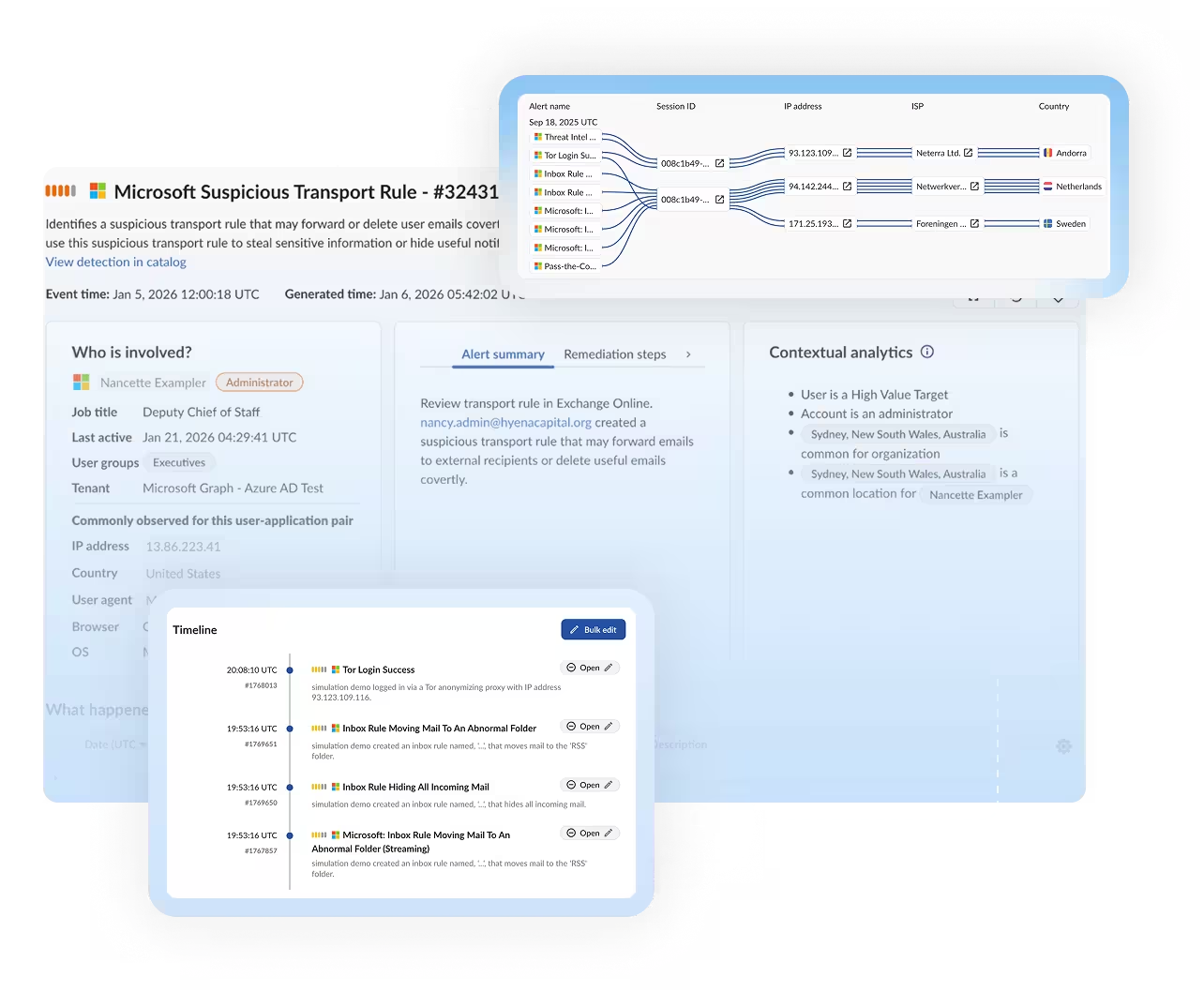
Respond confidently and quickly with full blast radius mapping and impact analysis.
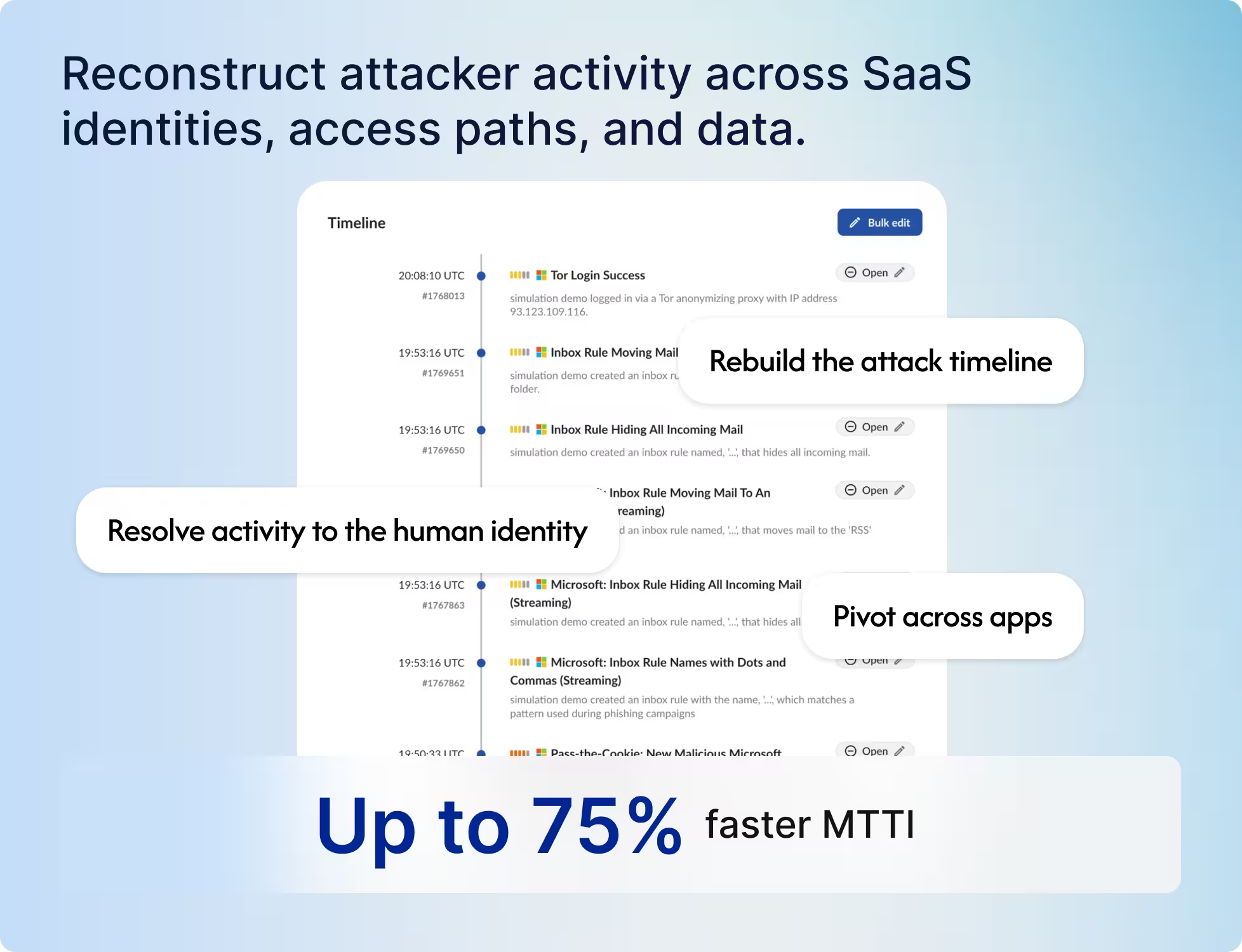
Obsidian's Knowledge Graph unifies evidence across multiple SaaS apps and reconstructs attacker timelines — sharpened by threat patterns detected across hundreds of enterprise environments — so responders can prove scope and impact fast, without manual logs stitching.



.avif)

.avif)




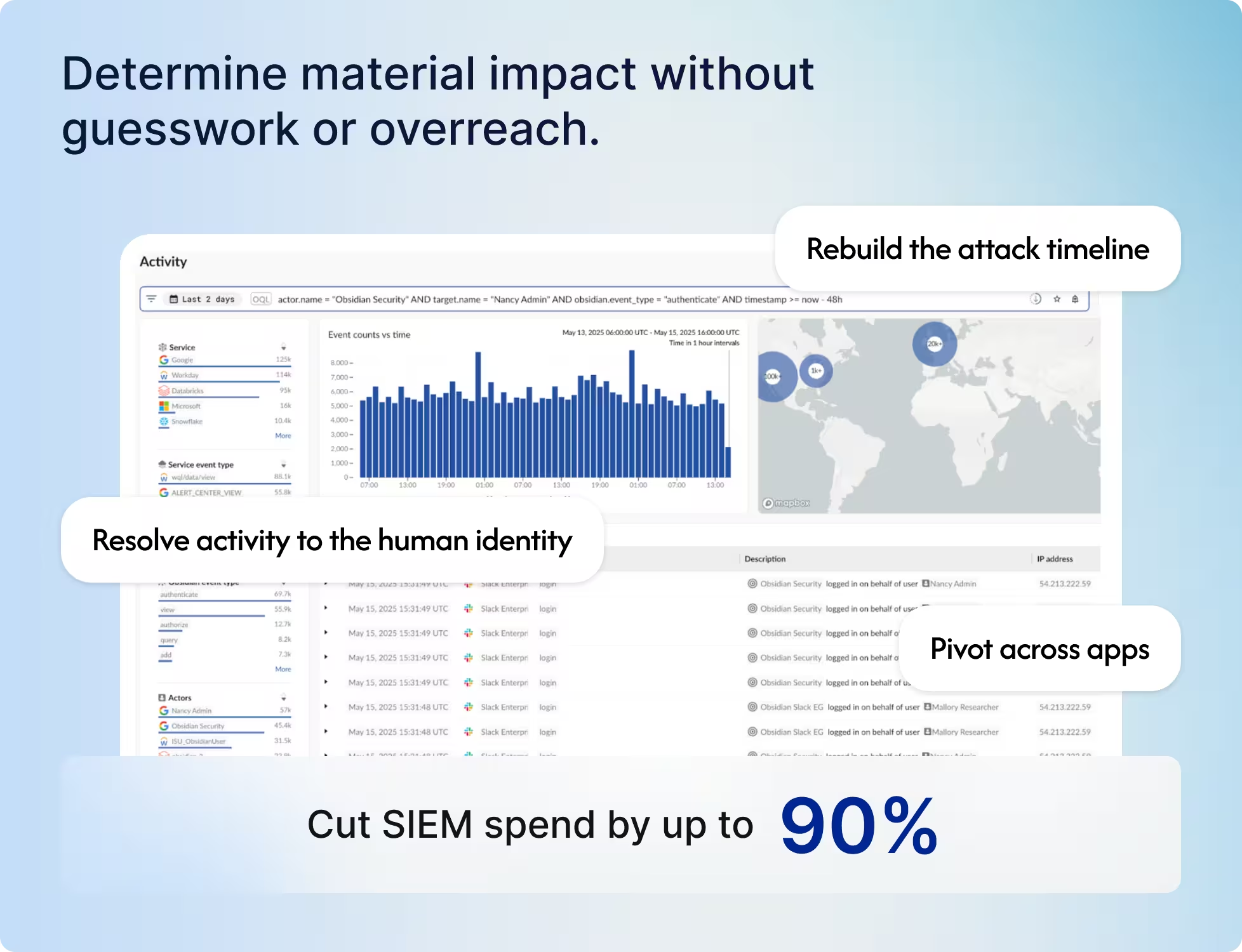
Obsidian's Knowledge Graph normalizes activity from your IdP and SaaS apps into a single investigation view. It resolves accounts and sessions back to identities, connects access events to data objects, and shows you what happened across apps; no manual log stitching required.
In SaaS, identities and data span multiple platforms, each with different log formats and visibility gaps. Identity-based attacks bypass perimeter controls entirely. Traditional tools force you to manually collect and correlate logs from each app. Obsidian provides centralized visibility with identity resolution and normalized context already built in, so you can pivot immediately.
Yes. Obsidian shows exactly which data was accessed, modified, or shared—and where attacker activity stopped. That evidence lets you make confident, defensible decisions under regulatory deadlines instead of disclosing broadly out of uncertainty.
By proving what was accessed and where activity stopped, teams can avoid broad assumptions and reduce unnecessary disclosure or escalation driven by uncertainty.
Obsidian baselines normal activity for each identity, then flags unusual token or session use based on location, context, and behavior. Investigators can see session origin, authentication method, and activity patterns to separate legitimate use from hijacked access.
Obsidian provides forensic visibility across Microsoft 365, Google Workspace, Salesforce, ServiceNow, Okta, and dozens of other apps. Activity is normalized into a single timeline so you can investigate across platforms without switching tools.
Customers reduce investigation timelines from days to minutes. You can pivot across identities, sessions, and data events immediately. That means, no waiting on SIEM ingestion or building custom correlation queries.
Platforms like AppOmni and Valence tend to forward security events to a SIEM—they don't store stateful SaaS activity themselves. That means you're paying egress costs, SIEM ingest costs, and engineering time to build parsing rules and queries. Obsidian stores SaaS activity natively with identity and permission context pre-normalized. Investigators pivot across apps, sessions, and data events immediately.
Obsidian baselines normal behavior for each identity; location, access patterns, token usage. When a session deviates, you see the authentication method, origin, and behavioral anomalies in context. That makes it clear when legitimate credentials are being used maliciously.