Govern every agent n8n puts to work

n8n puts powerful automation in anyone's hands. Obsidian makes sure security keeps pace.
Why your teams are using n8n

Unlike off-the-shelf automation tools, n8n lets technical teams build and deploy custom AI agents and workflows across any app, API, or data source — with full control over logic, infrastructure, and integrations.

Automate complex workflows

Orchestrate multi-step tasks like data pipeline management, API integrations, incident routing, and cross-tool synchronization across your entire stack.

Accelerate delivery

Use agents to connect tools, trigger actions, and automate handoffs between systems, cutting the manual work out of your engineering and ops workflows.

Built for everyone to use

Let technical and ops teams build custom automations without relying on dedicated engineering resources, using n8n's flexible, code-optional builder.

Powerful automation makes n8n great — and risky.

Every n8n agent inherits user permissions and operates across your SaaS and AI environment Without visibility into what they're doing, risky actions and data access go undetected until it's too late.

Excessive agent permissions create hidden exposure

n8n agents often request broad access (like read/write all data) when only narrow permissions are needed, creating unnecessary exposure.

Every node connection is a potential entry point

A single node connecting to core SaaS like Salesforce or Google Drive can become a hidden entry point.

Sensitive data leaks through automated flows

Automated flows can accidentally sync sensitive customer or employee data across systems.


Workflows built outside security's view go ungoverned

Workflows built outside security’s view make it impossible to enforce policies and monitor agents.


Third-party nodes introduce unvetted code into production

Community nodes or third-party plugins may contain vulnerabilities or malicious code that slip into production workflows.

n8n’s native controls can’t stop breaches

N8n surfaces your agents but can’t show you every risk, leaving security teams blind to unauthorized tool calls, excessive permissions, and unsanctioned cross-service actions.

Secure your agents

Siloed visibility across tenants

No single view of which agents, MCP servers, and models are running across your tenants.

No single control plane

Native logs weren't built to capture risky tool calls and cross-service actions, especially from agents running outside n8n on platforms like Claude.

Over-permissioned agents

Agent permissions are scattered across every app they touch. Without a unified view, you can't know your true exposure until something goes wrong.

Privilege escalation

Agents act on behalf of users but aren't always bound by the same limits. Without a full identity graph, you won't know when an agent quietly exceeds the access its user was granted.

Control every n8n agent from a single governance layer

Map, monitor, and manage your agents with a single governance layer.
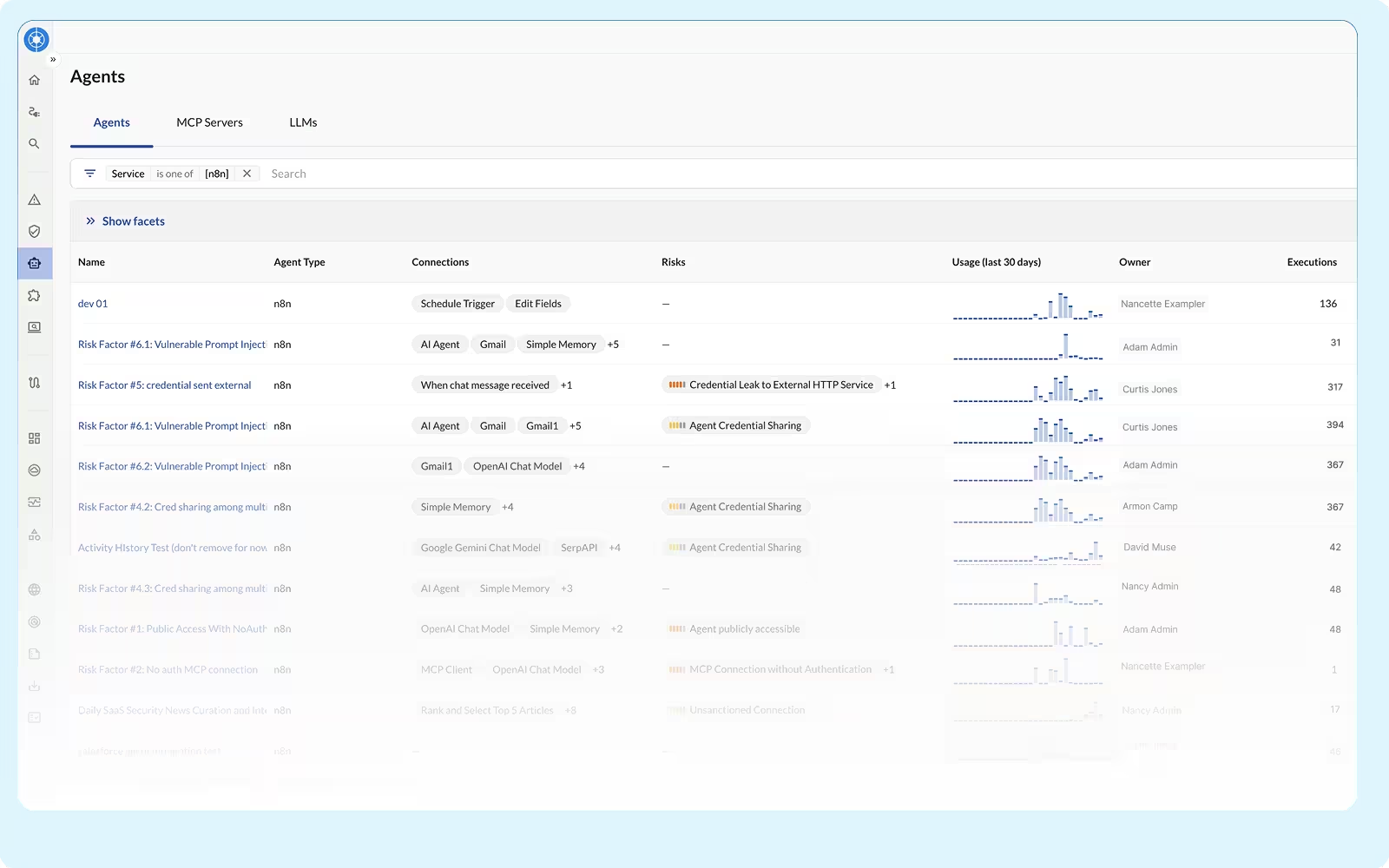
Inventory every n8n agent

Maintain a continuous system of record for every agent, including the MCP servers they invoke, the LLMs behind them, the applications they connect to, and the privileges they hold.
Shadow AI and auditability: Find unsanctioned agents including their connections and executions.
Consolidate every agent: Map agents and their risks no matter the platform they are built on.

Real-time risk assessments for your agents

Know which agents are risky before they cause damage. Obsidian automatically maps everything an agent can access and flags the ones that pose the biggest threat, so your team always knows where to focus.
Secure new agents by default: Automatically assess new and updated agents for risky scopes and unsafe tool chains.
Prioritize your security: Sort risks by criticality to consistently govern agents across every AI platform your teams deploy.

Reduce excessive access risks

Alerts show when n8n configurations and connections could expose your data, lead to privilege escalation, or confused deputy attacks.Trace every Vertex agent’s connections and compare to approved apps and MCP servers to reduce the blast radius and prevent data exposure.
Review unsanctioned connections: Spot and remediate risky connections before a prompt injection attack or compromise can occur.
Protect sensitive systems: Limit agent access to only approved users.