Register for our webinar on AI and the SaaS Supply chain with experts from Workday and S&P Global

AI AGENT GOVERNANCE

Secure your AI agent workflows

AI agents are pulling data faster than security can control their access. Get instant visibility and risk alerts to govern every agent as they move through SaaS.

Jump To:
ChallengeSolutionUse CasesCustomer StoriesFAQ
Challenge

Invisible AI agents leak, copy, and move sensitive data at machine speeds

AI agents operate across SaaS without oversight, leaving teams blind to app access, permissions, and sensitive data movement.

  • AI agents outpace security visibility and control
  • Overly broad permissions create always-on data exposure risks
  • Disparate AI tools obscure agent activity and data movement
  • Orphaned agents retain access long after projects end

16x

More data moved by AI agents than humans

10x

More access granted to agents than their workflows actually need

1000s

Of AI agents deployed each week without IT or security oversight

Solution

Ensure your autonomous AI workflows are secure

Securing AI agents requires SaaS context to see what they’re doing and identify which ones pose risk.

GET A DEMO

Find every agent

Uncover every agent, control their posture, and eliminate lifecycle risk.

Stop privilege creep

Understand and govern agent privileges to control actions and stop downstream risk.

Minimize excessive access

Keep rogue agents in check by ensuring every agent and action is policy aligned.

Enable innovation

Confidently adopt AI into your business to automate workflows at speed and scale.

Use Cases

Monitor every agent, action, and user to reduce risk and stop misuse

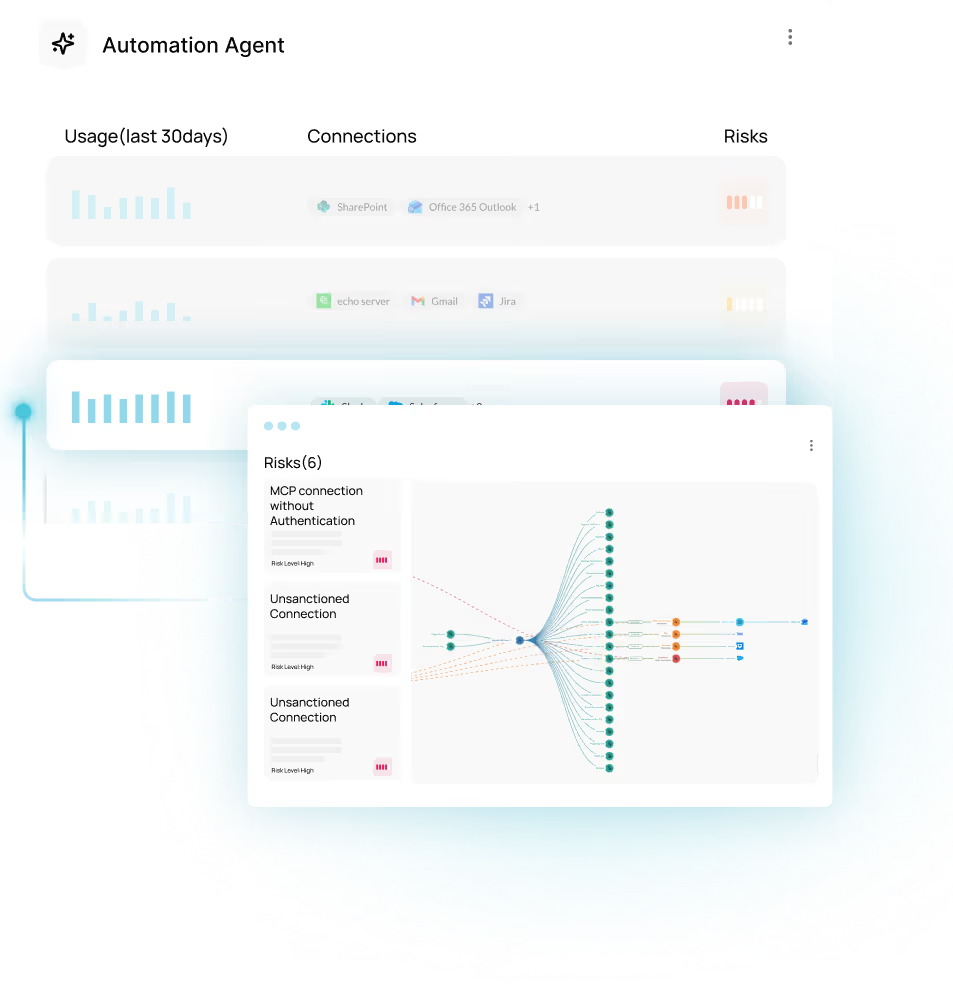
Context into every AI agent including who built it, the SaaS it touches, its privileges, and every action it takes.

Understand the risk behind every agent’s SaaS privileges, connections, and activities to govern access and stop data exposure.

Customer stories

View all customer stories →

Targeted insights to help govern your AI agents

Frequently asked questions

Why are AI agents considered high risk?

AI agents move data at machine speed, transferring up to 16× more data than traditional SaaS integrations and often inherit 10× more permissions than they need. This privilege explosion creates hidden pathways for misuse. If compromised, an agent can exfiltrate sensitive data or spread across systems in seconds, introducing new SaaS supply chain risks.

Aren’t AI agents just another SaaS integration? Why act now?

No. Traditional SaaS integrations usually have narrow, well-defined scopes. AI agents are different: they chain tasks across multiple apps, inherit broad OAuth privileges, and act on behalf of users without human approval. That autonomy makes them far more dangerous if left unchecked. The longer you wait, the faster the risks multiply.

How do AI agents create SaaS supply chain risks?

SaaS applications are deeply interconnected, and AI agents amplify this by chaining actions across multiple platforms with little oversight. If one agent is compromised, attackers can pivot into other SaaS systems like Salesforce, Google Workspace, Slack, or Azure in minutes. AI agents expand the attack surface, creating an entirely new class of SaaS supply chain security risks—where exposure in one application can rapidly cascade across the enterprise.

What makes agentic AI agents different from traditional SaaS integrations?

SaaS-to-SaaS connectors pass data based on predefined rules. AI agents go further: they make decisions, execute actions across multiple apps, and often request excessive OAuth scopes. Their autonomy gives them far greater reach, making them a powerful accelerant for SaaS supply chain risks if abused.

How quickly do AI agents proliferate in enterprises?

Very quickly. Thousands of agents can appear in a matter of days. Some are auto-provisioned in seconds. Most launch without IT or security oversight. Left unchecked, these “shadow agents” spread silently, multiplying SaaS connections before anyone knows they exist. Obsidian provides visibility and control directly inside SaaS before that happens.

Can’t traditional SaaS security tools handle this?

No. Legacy tools were designed for human-driven SaaS activity, not AI agents. They can’t see agent actions, connect them to OAuth privileges, or enforce least privilege in real time. Agents operate faster, with broader access, and create new supply chain risks that legacy tools can’t detect.

How does Obsidian secure AI agents?

Obsidian gives security teams full visibility into every AI agent, its privileges, SaaS connections, and actions, so you can govern access, stop privilege creep, and prevent misuse before it causes cascading risk.

Will securing AI agents slow down my employees?

No. Obsidian protects autonomous workflows directly inside SaaS. Guardrails run in real time, so teams can continue working and innovating safely.