Take control of the fastest growing class of non-human identity. Discover every AI agent, see the privileges it inherited, and stop machine insiders before they move sensitive data across SaaS.
AI agents are the fastest growing category of non-human identity in the enterprise. They inherit broad scopes and act on behalf of users who never reviewed what the agent can actually do. Most are deployed without security oversight.
AI agent identity management requires SaaS context. You cannot govern what you cannot see, and you cannot enforce least privilege on an agent without knowing what it can actually do, on whose behalf, with what downstream reach. Obsidian correlates agent configuration with real entitlements, identity context, and runtime behavior into a single picture of effective authority.
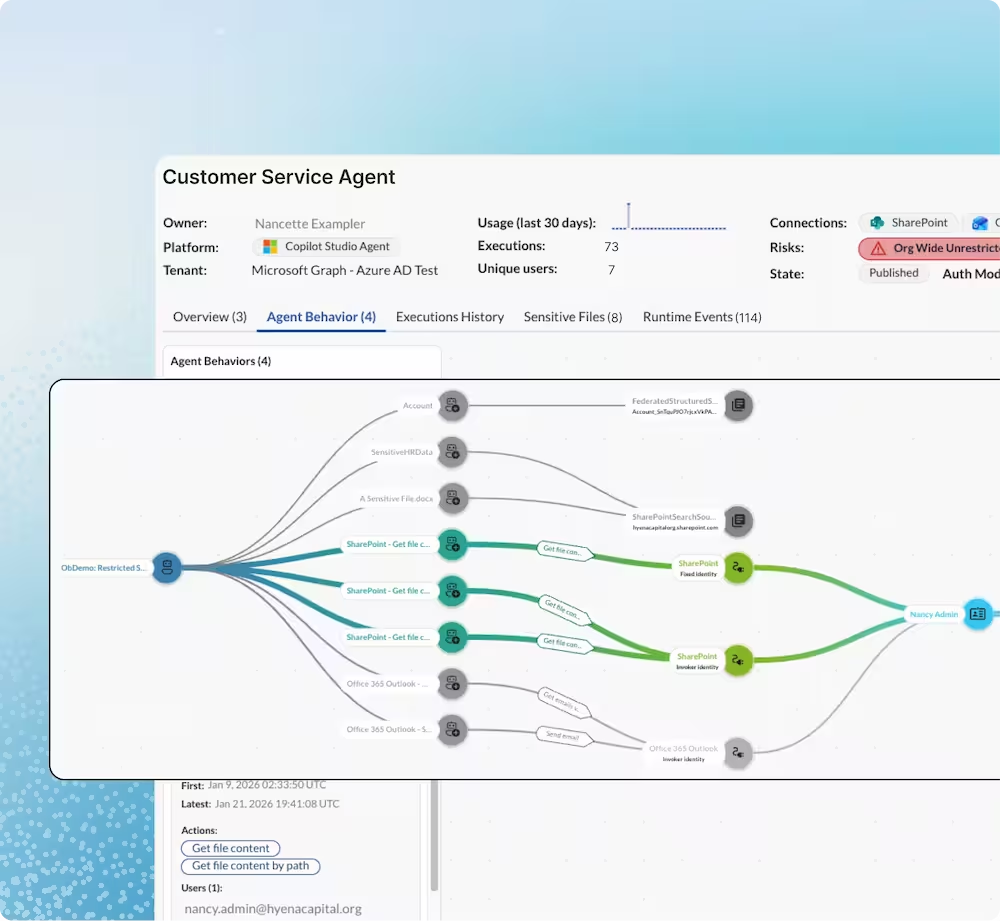
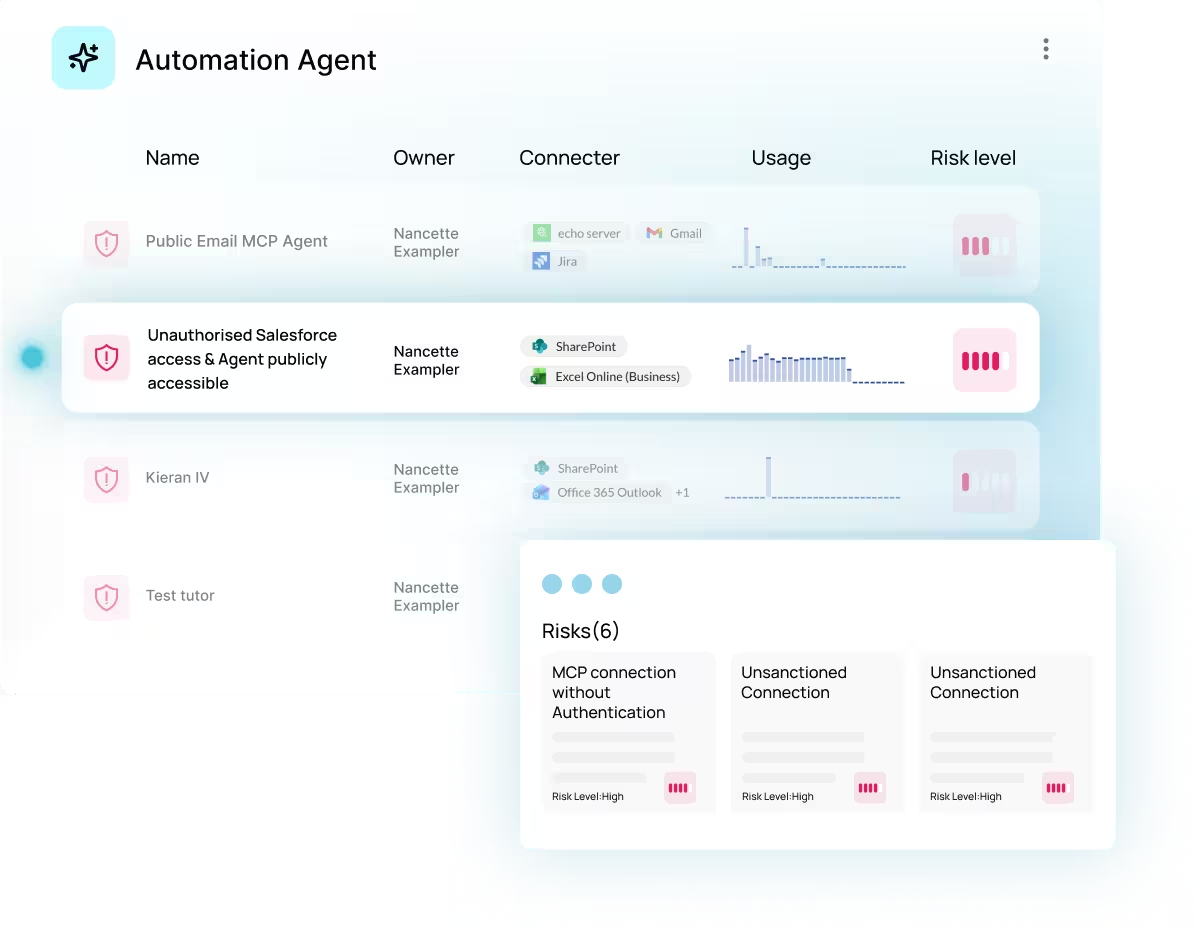
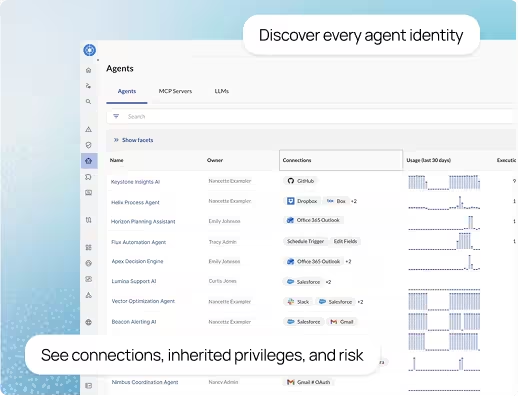
Obsidian connects into AI platforms to create a single control plane for non-human identities. The dashboard shows every AI agent including who built it, the SaaS apps it touches, the OAuth scopes it holds, and every action it has taken. Shadow agents created outside official channels surface in the same view.


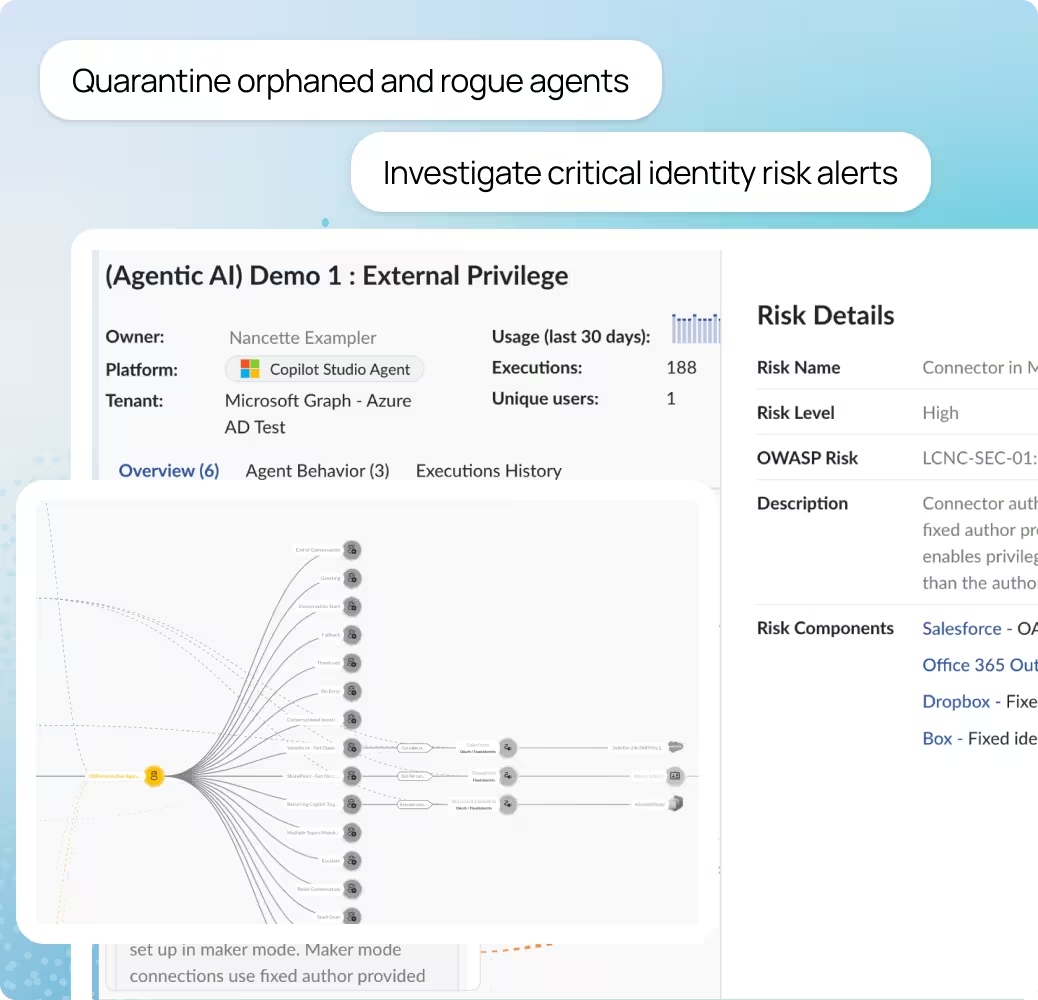
Knowing an agent exists is not governance. Obsidian correlates agent configuration with real entitlements from connected SaaS, identity context, and behavior to show what each agent can actually execute. Maker mode agents, agents impersonating administrators, and agents holding scopes far beyond their function are flagged and prioritized.
Static inventories miss what behavioral detection reveals. Tokens used from unexpected geographies, OAuth apps requesting new scopes months after install, and agents whose creator has left the company are surfaced as identity risk, not noise. Runtime guardrails to enforce policy at the moment an action is taken are rolling out across supported platforms in 2026.

AI agent identity management is the discovery, governance, and lifecycle control of the identities AI agents use to authenticate and act inside SaaS, cloud, and AI platforms. It treats every agent as a non-human identity with inherited privileges, owners, and a blast radius that has to be governed in the same way human identities have always been, but with controls designed for machine speed.
AI agents are provisioned by developers, business users, and other agents at machine speed. They persist long after the workflows that created them, and accumulate inherited permissions across connected apps. Non-human identities already outnumber humans 25 to 50 times in modern enterprises, and that ratio accelerates with every agent deployed.
Traditional IAM assumes human lifecycle events trigger access changes, that managers review access during quarterly certifications, and that authentication happens interactively with MFA. None of those assumptions hold for agents. Service accounts have no managers, OAuth tokens never complete MFA, and API keys do not have working hours. AI agent identity management replaces those assumptions with continuous discovery, behavioral detection, and least privilege enforcement built for machine identities.
Machine insider risk is the risk that a non-human identity, often an AI agent, executes actions its invoker should not be able to perform. This happens when agents run on maker mode credentials, when action chaining lets a low-privilege user reach data through an agent that holds higher privileges, or when an orphaned agent continues operating after its owner is offboarded. Obsidian detects the identity an agent is using and flags privilege escalation paths that legacy IAM cannot see.
Bearer tokens grant access to whoever holds the token, with no verification of who is actually using it. Every AI agent is, in effect, a bearer token holder with the full authority of whoever provisioned it. The 2025 Salesloft-Drift breach demonstrated the consequences. Stolen bearer tokens were used to infiltrate Salesforce environments across more than 700 organizations without triggering authentication alerts, because legitimate integration activity looked identical to malicious token use.
Obsidian builds a continuous, real-time inventory of every AI agent across supported platforms, including the scopes it holds, the accounts it acts on behalf of, and the actions it has taken. The Identity Graph correlates that data with entitlements from connected SaaS to show effective authority, not theoretical configuration. Maker mode detection, orphaned agent detection, and toxic combination scoring surface the identity risks that matter, and audit-ready evidence is generated automatically.
Runtime guardrails for AI agents are rolling out across supported platforms in 2026, with Microsoft Copilot first and additional platforms following. Today, Obsidian provides full visibility into agent identity, inherited privileges, and behavior, and generates the evidence security teams need to remove access, revoke tokens, and tighten OAuth scopes. As runtime enforcement becomes available platform by platform, the same governance plane will block high-risk agent actions in real time.
No. The point of governing agent identities is to let teams adopt AI faster, not slower. When security has continuous visibility into who created each agent, what it can do, and how it is being used, approval workflows can be lightweight rather than blocking. Innovation accelerates when the identity layer is trusted.