Detect Threats Pre-Exfiltration
93% of SaaS Compromises Start at the App
And attackers move laterally in minutes.
Get accelerated SaaS threat detection and prevention.

And attackers move laterally in minutes.
Get accelerated SaaS threat detection and prevention.

- Stop attack vectors like SSPR, SIM swapping, and helpdesk social engineering before data loss
- Identify anomalous user behaviors using ML-based algorithms
- Leverage out-of-the-box detection rules, informed by incident response engagements and mapped to the MITRE ATT&CK framework
- Customize rules to adapt to your specific environment
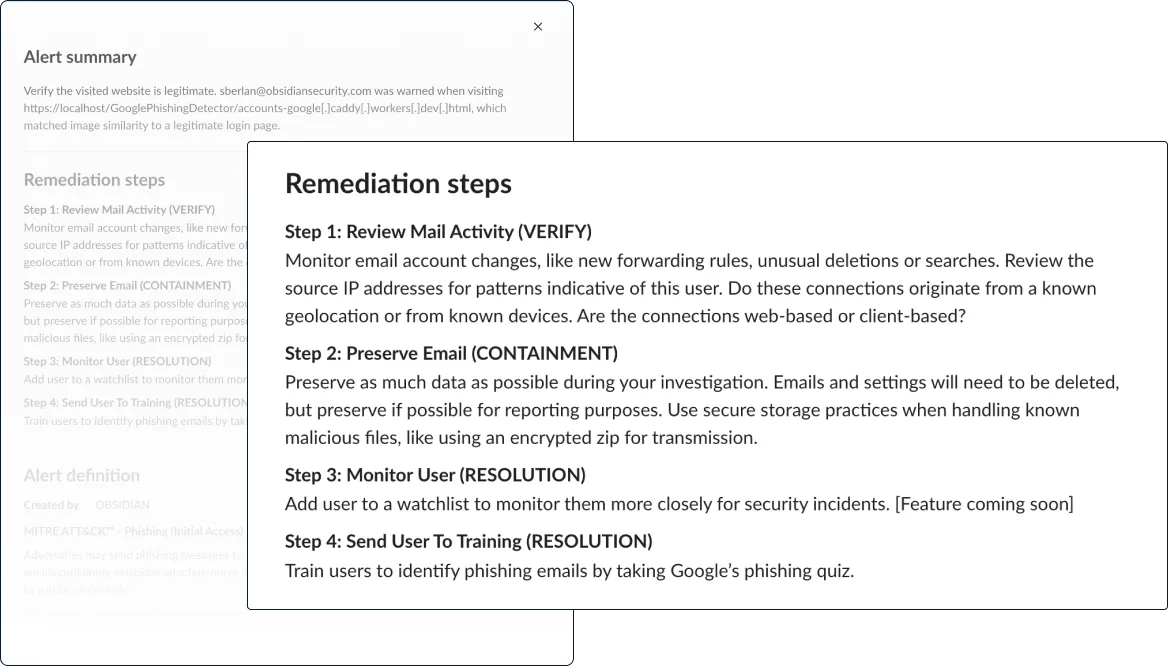
- Receive actionable alerts with details like role, privilege level, locations, and behavior to respond quickly to SaaS threats
- Baseline user behavior trends to expedite alert triage
- Start with tailored remediation steps to accelerate response efficiency
- Drive investigation and hunt for additional insights with searchable SaaS logs
- Integrate with SIEM and SOAR platforms to automate incident response workflows

- Improve your threat detection with growing insights from hundreds of IR engagements and deployments
- Gain insights into high-risk users and applications across your SaaS environment

Director of Security Operations, Leading Financial Institution

